- Home
- Shopify vs WordPress in 2026
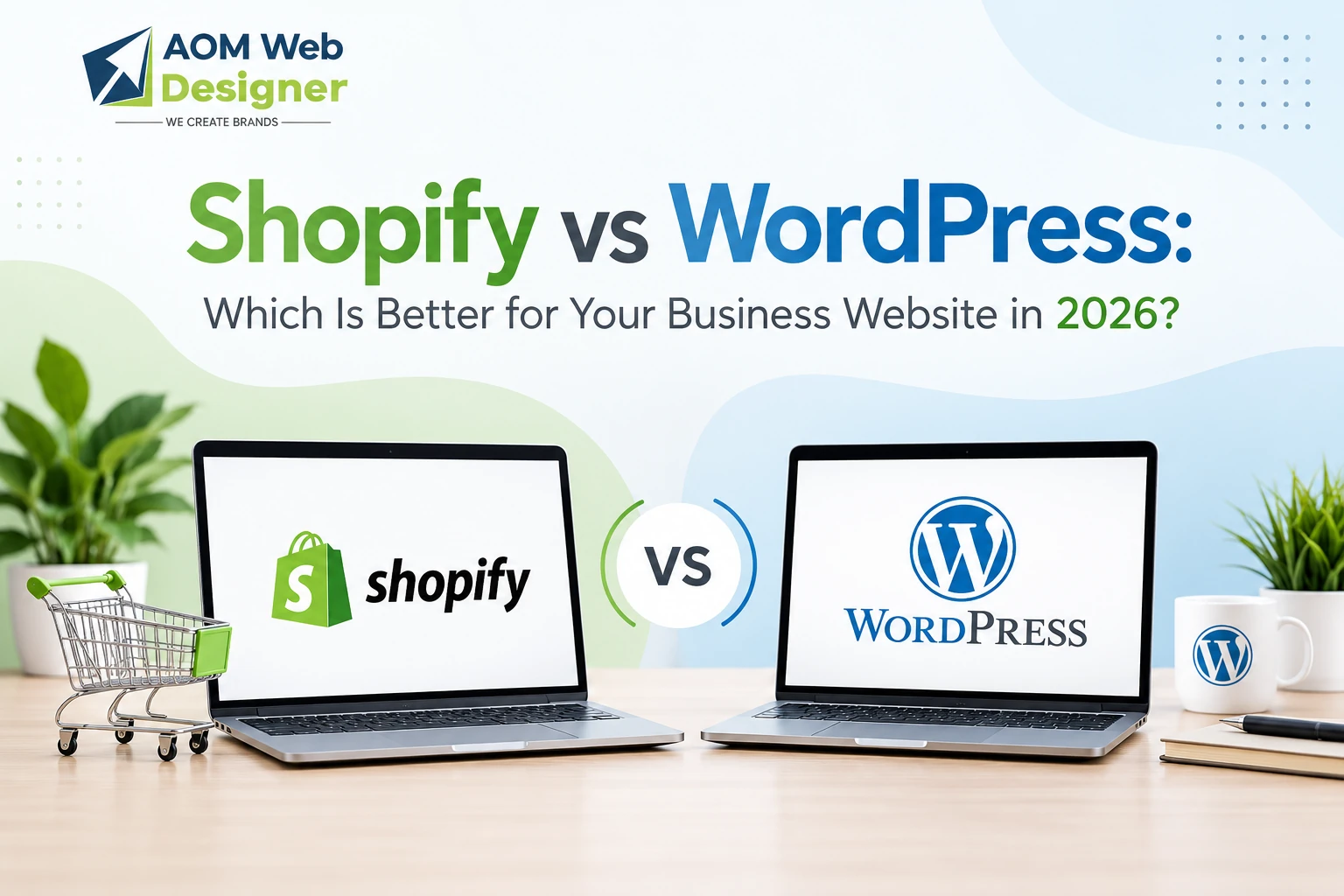
Shopify vs WordPress: Which Is Better for Your Business Website in 2026?
Choosing the right platform is an important step when building a business website. Two popular options are Shopify and WordPress. Both platforms help businesses create professional websites, but they serve different needs.
Shopify is primarily designed for building and managing online stores, while WordPress offers greater flexibility for business websites, blogs, service pages, and customized online experiences. The best choice depends on your business goals, budget, technical requirements, and plans for growth.
In this guide, AOM Web Designer compares Shopify vs WordPress in 2026 to help you choose the right platform for your business.
Shopify vs WordPress in 2026
Shopify is generally better for businesses that want an easy-to-manage online store with integrated ecommerce features. WordPress is often better for businesses that need a flexible website, content marketing, customized functionality, and greater control over their website structure.
Shopify includes hosting, security management, and ecommerce tools in its subscription plans. WordPress.org is a self-hosted platform that gives website owners more control over hosting, plugins, themes, and customization, but it requires more ongoing management.
For a business that primarily sells products online, Shopify can be a practical choice. For service businesses, blogs, content-driven websites, and complex custom projects, WordPress may offer more flexibility.
What Is Shopify?
Shopify is a hosted ecommerce platform that allows businesses to build online stores without managing their own web server. It provides tools to list products, manage inventory, process orders, and handle various aspects of online selling.
Key Features of Shopify
- Ready-made ecommerce themes
- Product and inventory management
- Shopping cart and checkout functionality
- Payment integrations, depending on location and eligibility
- Shipping and order management tools
- App integrations for additional features
- Hosting and platform-managed security updates
Shopify is suitable for startups, retailers, fashion brands, product manufacturers, and businesses that want to sell online without managing a complex technical setup.
However, subscription charges, paid apps, theme costs, and transaction-related fees where applicable should be considered when calculating the total cost.
What Is WordPress?
WordPress.org is an open-source content management system that allows businesses to create and manage websites with extensive customization options.
With WordPress, you can build a company website, blog, portfolio, service website, membership platform, or ecommerce store using plugins such as WooCommerce.
Key Features of WordPress
- Flexible website design and development
- Custom pages, blog posts, and landing pages
- SEO plugins and content management tools
- Thousands of themes and plugins
- Ecommerce functionality through WooCommerce
- Greater control over hosting and website files
- Integration with analytics, lead generation, and marketing tools
WordPress is particularly useful for businesses that want to publish regular content, target multiple search keywords, build service pages, and customize their website as their business grows.
Because WordPress.org is self-hosted, you are responsible for arranging hosting and maintaining appropriate backups, updates, security, and performance.
Shopify vs WordPress: Detailed Comparison
The following table highlights the main differences between these platforms.
| Feature | Shopify | WordPress.org |
|---|---|---|
| Primary purpose | Ecommerce stores | Websites, blogs, and ecommerce |
| Ease of use | Generally easy for store management | Depends on setup and customization |
| Hosting | Included | Purchased separately |
| Design flexibility | Themes and supported customization | Extensive theme and code customization |
| SEO capabilities | Built-in essentials and app integrations | Flexible SEO tools and plugins |
| Ecommerce | Integrated store features | Available through WooCommerce |
| Maintenance | Much of the infrastructure is managed | Owner manages hosting and maintenance |
| Content marketing | Blog functionality available | Extensive publishing flexibility |
| Scalability | Scales through plans, apps, and integrations | Scales with hosting, architecture, and optimization |
| Cost structure | Subscription plus potential additional costs | Hosting, development, plugins, and maintenance costs |
Neither platform is automatically better for every business. Your requirements should determine the final choice.
1. Which Platform Is Better for SEO?
SEO is important for businesses that want to attract customers through Google and other search engines.
Both Shopify and WordPress can support effective SEO when configured correctly. Neither platform guarantees higher rankings simply because you use it.
Shopify provides essential SEO features, including editable page titles, meta descriptions, canonical URLs, and sitemap generation. However, certain URL structures are platform-defined, which can limit some types of customization.
WordPress offers extensive control over content structure, internal links, metadata, redirects, schema implementation, and technical SEO through suitable plugins and development.
For example, a business that publishes service pages, location pages, detailed blogs, and educational resources may find WordPress particularly useful for managing a large content strategy.
SEO recommendation: Choose the platform that supports your content structure, technical requirements, and long-term SEO plan. Quality content, relevant keywords, mobile usability, page performance, and helpful internal links matter more than the platform name alone.
2. Which Platform Is Better for Ecommerce?
Shopify is designed around ecommerce. Businesses can manage products, inventory, orders, discounts, and checkout from a central dashboard.
This makes it suitable for businesses that want to launch an online store quickly and simplify day-to-day store management.
WordPress can also power an ecommerce website through WooCommerce. It provides flexibility for custom product pages, content-led shopping experiences, integrations, and specialized business requirements.
However, WooCommerce setup may require additional configuration for payments, shipping, security, backups, and performance.
Choose Shopify if: Your main goal is to launch and manage an online store with fewer infrastructure responsibilities.
Choose WordPress with WooCommerce if: You need more control over your store's design, content, integrations, or custom functionality.
3. Which Platform Is More Affordable?
The cost depends on the features you need and the level of customization required.
Shopify generally involves a recurring subscription, with possible additional costs for premium themes, paid apps, payment processing, and other services.
WordPress software is free to download, but a professional website may require paid hosting, a domain, premium plugins, custom development, maintenance, and security services.
A simple website on either platform can be affordable, while a large ecommerce store or heavily customized business website can require a substantial investment.
When comparing prices, consider the total cost of ownership rather than only the starting price.
Include development, hosting or subscription fees, integrations, maintenance, SEO, future upgrades, and the time needed to manage the website.
4. Which Platform Is Easier to Maintain?
Shopify manages much of the underlying infrastructure, making it attractive to business owners who prefer to focus on selling products rather than server administration.
WordPress provides greater control, but website owners need a reliable maintenance process. This usually includes software updates, backups, security monitoring, plugin compatibility checks, and performance optimization.
For either platform, professional setup can reduce technical issues and improve the website's usability.
5. Which Platform Is Better for Small Businesses?
The right platform depends on what your business does.
- Retail and product businesses: Shopify is often a strong starting point for ecommerce.
- Consultants and service providers: WordPress is often suitable for service pages, lead forms, case studies, and blogs.
- Content-driven businesses: WordPress offers extensive publishing and content organization capabilities.
- Businesses with specialized requirements: Either platform may work, depending on the integrations and customization needed.
- Growing brands: Compare future functionality, operating costs, marketing requirements, and scalability before making a decision.
A professional website should not only look attractive. It should also help visitors understand your services, find information easily, and take the next step toward becoming customers.
Shopify vs WordPress: Which Should You Choose in 2026?
There is no universal winner in the Shopify vs WordPress comparison.
Shopify is a practical choice for businesses that prioritize online selling, integrated ecommerce tools, and simplified technical management.
WordPress is a strong choice for businesses that prioritize website flexibility, content marketing, customized functionality, and control over their website structure.
Before deciding, identify your main goal: selling products, generating leads, publishing content, or building a combination of these capabilities. Then compare the total cost, maintenance requirements, and functionality each platform can provide.
Conclusion
Shopify and WordPress are both capable website platforms, but they solve different business problems. Shopify makes ecommerce management more straightforward, while WordPress provides extensive flexibility for business websites, content publishing, SEO customization, and tailored functionality.
The right decision comes down to your business objectives, budget, technical needs, and long-term growth strategy. Taking the time to compare these factors can help you avoid unnecessary expenses and build a website that supports your business goals.
Build the Right Website for Your Business with AOM Web Designer
Planning a new business website or considering a move from Shopify to WordPress? AOM Web Designer helps businesses plan and develop websites around their design, functionality, SEO, and lead-generation requirements.
Whether you need a professional business website, a customized WordPress website, or a Shopify ecommerce store, choosing the right setup is the first step toward building a strong online presence.
Contact AOM Web Designer to discuss your project and find a website solution that fits your business goals.
Website: https://www.aomwebdesigner.com/
Explore our website development services and SEO services in Ahmedabad to learn more.
Frequently Asked Questions
Shopify is often better for businesses focused on online selling and straightforward store management. WordPress may be better for businesses that need greater website customization and content flexibility. The best choice depends on your requirements.
WordPress offers extensive SEO customization through plugins and development, while Shopify includes important SEO features in its hosted platform. Both can rank well when their technical SEO, content, and user experience are properly managed.
Yes. WordPress can support ecommerce through WooCommerce and other suitable integrations. Businesses can create product pages, manage orders, configure payment methods, and customize their online stores.
Shopify is generally easier for managing an online store because hosting and many ecommerce functions are integrated. WordPress can also be user-friendly after setup, but its flexibility may require more technical support.
Yes. Products, customer information, orders, and content may be migrated where supported, subject to platform permissions and data export limitations. A migration plan should account for URL redirects, metadata, images, analytics, and SEO performance.
Both platforms can work well for Indian businesses. Consider your preferred payment gateways, local shipping needs, business model, website maintenance resources, and total cost before choosing.


